You Won’t Believe How Alive Bridgetown’s Streets Feel at Sunset
There’s something magical about public spaces where culture breathes through every step you take. In Bridgetown, Barbados, it’s not just about monuments or markets—it’s the way people gather, laugh, and move through the city that tells the real story. I wandered its streets with no map, just curiosity, and found rhythms I never expected. From historic squares to seaside promenades, the city’s soul lives in shared spaces shaped by centuries of island life. This is urban culture at its most authentic.
The Heartbeat of Heroes’ Square
At the center of Bridgetown lies Heroes’ Square, a public plaza that pulses with the city’s evolving identity. Once known as Trafalgar Square during colonial times, this open expanse has been reimagined not as a relic of the past but as a living stage for Bajan life. By morning, the square stirs with activity—vendors unfold wooden carts beneath the shade of century-old mahogany trees, arranging bunches of green bananas, yams, and dasheen with practiced care. Commuters pass through in steady streams, their footsteps echoing off the limestone facades of surrounding buildings, many of which retain the architectural elegance of British Caribbean design.
As the day unfolds, the square transforms. Office workers pause for lunch on stone benches, sharing stories over takeout roti wrapped in wax paper. Children chase pigeons between the monument’s bronze pillars, while elders sip sorrel from paper cups, their voices low and rhythmic in conversation. By late afternoon, the true spirit of the square emerges. Steelpan musicians arrive with their instruments strapped to wooden stands, tuning their metal drums as an audience gradually gathers. The first notes ring out—melodic, bright, unmistakably Caribbean—and within minutes, a small crowd sways in place, caught in the moment.
What makes Heroes’ Square remarkable is not just its history but its accessibility. Unlike many urban centers where public space is privatized or restricted, here, the square belongs to everyone. There are no entry fees, no security barriers, no timed access. This openness fosters a sense of collective ownership. Locals speak of the square with pride, not just as a tourist attraction but as a place where national celebrations begin, where political speeches are heard, and where everyday joy is freely expressed. It reflects a deep-rooted Bajan value: that culture thrives best when it is shared, not contained.
Cheapside Market: Where Voices Blend with Spices
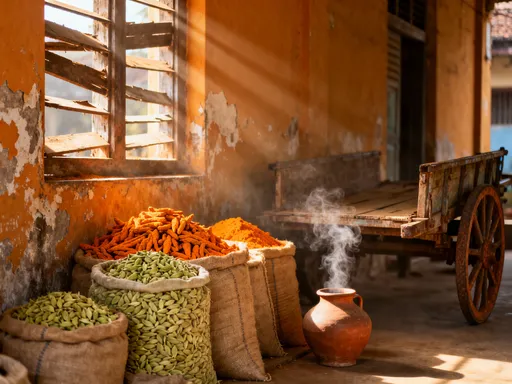
A short walk from Heroes’ Square, Cheapside Market offers one of the Caribbean’s most vibrant sensory experiences. Established in the 19th century, this open-air market has long served as a cornerstone of Bridgetown’s economic and social life. Rows of canvas-covered stalls stretch along the roadside, each one a microcosm of island abundance. Bright pyramids of mangoes, papayas, and soursop rise like edible sculptures, while baskets overflow with callaloo, cucumbers, and sprigs of fresh thyme. The air carries a layered fragrance—ripe fruit, smoked fish, and the sharp tang of scotch bonnet peppers being chopped for pepper sauce.
More than a marketplace, Cheapside is a social hub. Vendors call out in melodic Bajan Creole, their voices rising and falling in rhythm with the day’s energy. Haggling is not a transactional formality but a performance, laced with humor and familiarity. “You know me, Miss Linda—I can’t sell you tamarind for less than two dollars,” one vendor laughs, “but for you, I’ll throw in an extra one!” These exchanges are not just about price; they are about connection. Many customers have been coming for decades, their relationships with sellers built over years of weekly visits.
The market also functions as an informal support network. Elderly women share news while selecting okra; young mothers consult each other on the best produce for baby food. Community announcements are passed along organically—where a church fundraiser is happening, which clinic is offering free blood pressure checks, when the next neighborhood clean-up day will be. Economically, the market supports hundreds of small-scale farmers and artisans, many of whom travel from rural parishes each morning to sell their goods. It is a grassroots engine of resilience, where self-reliance meets solidarity.
Despite modernization pressures, Cheapside remains largely unchanged in its form and function. There are no chain stores, no digital payment kiosks dominating the scene. Cash still changes hands, and receipts are often scribbled on the back of old flyers. This authenticity is part of its appeal—not only to locals but to visitors seeking an unfiltered glimpse into Bajan daily life. In an age of homogenized shopping experiences, Cheapside stands as a testament to the enduring power of human-centered commerce.
The Waterfront as a Living Room
Along the western edge of Bridgetown, the city opens onto the Caribbean Sea, where the waterfront functions as a communal living room for residents and visitors alike. The promenade, part of the UNESCO World Heritage-listed Historic Bridgetown and its Garrison, blends natural beauty with thoughtful urban design. Stone pathways wind past restored 18th-century warehouses, now repurposed as cafes and craft shops, while the gentle lap of waves against the seawall provides a constant, soothing rhythm.
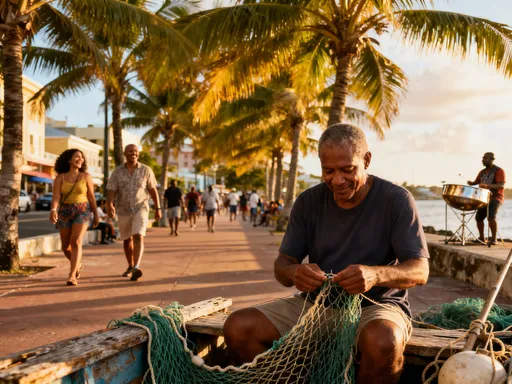
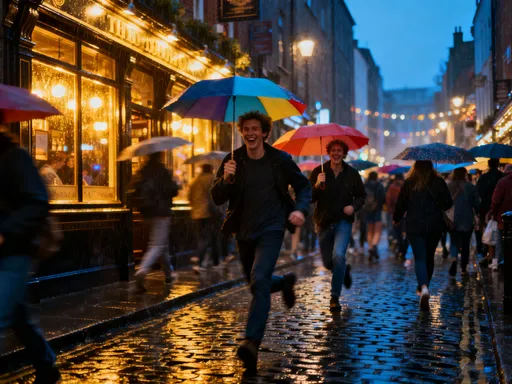
By late afternoon, the waterfront comes alive. Families stroll hand in hand, children chasing each other along the railings. Fishermen sit on low docks, mending nets with practiced fingers, their faces lined by sun and salt. Couples pause to take photos as the sun begins its descent, casting golden light across the water. Street vendors sell coconut water with straws, their carts decorated with hand-painted signs. The atmosphere is relaxed, unhurried—a contrast to the efficiency-driven pace of many modern cities.
What sets this space apart is its inclusivity. Unlike many coastal developments that prioritize tourism over local access, Bridgetown’s waterfront is designed for shared use. There are no gated sections, no luxury condos blocking the view. Benches are plentiful, shaded by sea grape trees, inviting people to sit, talk, and linger. Public restrooms and drinking fountains are maintained, ensuring comfort for all. During weekends, the area hosts informal gatherings—musicians playing acoustic sets, children’s art displays, and pop-up food stalls offering flying fish cutters and sweet bread.
Urban planners have recognized the value of this human-scale design. In recent years, efforts have been made to improve accessibility, including the addition of ramps for strollers and wheelchairs, and the installation of interpretive signs that tell the story of the area’s maritime history. These enhancements do not detract from the space’s authenticity; rather, they deepen its role as a place of education and connection. The waterfront is not just a scenic backdrop—it is a functional, evolving part of the city’s social fabric.
Street Life Beyond the Tourist Path
While Heroes’ Square and the waterfront draw the most attention, some of Bridgetown’s most meaningful public life unfolds in quieter, lesser-known corners. Places like Trafalgar Roundabout, Princess Alice Bus Terminal, and the small plazas tucked between residential blocks reveal a different side of urban culture—one defined by routine, resilience, and community improvisation. These spaces may lack the polish of tourist hotspots, but they offer a more intimate portrait of how people shape their environment.
At the Princess Alice Bus Terminal, for instance, the rhythm of daily life is unmistakable. Long before sunrise, the terminal buzzes with activity as drivers conduct safety checks and conductors call out destinations—“Oistins! Speightstown! Bathsheba!” Passengers gather in clusters, some sipping tea from thermoses, others reviewing handwritten notes before a job interview. The terminal is more than a transit hub; it is a social crossroads where news travels fast and friendships form across generations.
Informal seating—concrete ledges, repurposed crates, wooden benches under mango trees—allows people to wait comfortably. Local artists have painted murals on nearby walls, depicting scenes of fishing villages and harvest festivals. These small acts of beautification reflect a quiet ownership. Residents don’t wait for city projects to improve their surroundings; they take initiative, turning functional spaces into places of dignity and warmth.
Similarly, neighborhood plazas like the one near St. Mary’s Church serve as unofficial community centers. On weekends, elders play dominoes under canvas tents, their laughter punctuating the air. Teenagers gather after school, sharing music through portable speakers. These interactions are unscripted, unmonitored, and deeply valued. They represent a form of social infrastructure that cannot be measured in budgets or blueprints but is essential to the city’s emotional well-being.
Cultural Expression in Shared Places
In Bridgetown, culture is not confined to galleries or performance halls—it spills into the streets, parks, and corners of everyday life. Public spaces become stages for spontaneous expression, where music, dance, and storytelling emerge organically. During Crop Over Festival, the city’s annual celebration of harvest and heritage, this energy reaches its peak. Steelpan bands parade through the streets, their metallic melodies echoing off buildings. Dancers in vibrant costumes move in rhythm with the bass, drawing spectators into impromptu circles.
But cultural expression is not limited to festivals. On any given weekend, one might find youth practicing choreography on a concrete patch near the library, their movements sharp and confident. Elderly storytellers gather under trees, reciting folktales in rich Bajan dialect, drawing small audiences of curious listeners. Spoken word poets perform at open mic events held in repurposed shipping containers turned community spaces. These moments are not commercialized or curated for tourists; they are acts of personal and collective identity.
The accessibility of public space enables this creativity. There are no permits required for a steelpan player to set up in a park, no fees for a group to rehearse a dance routine. This freedom allows art to remain rooted in community, rather than becoming a commodity. It also fosters intergenerational exchange—grandparents teach grandchildren traditional songs, while teens introduce elders to new rhythms. In this way, public spaces serve as living archives of culture, constantly updated by those who inhabit them.
Challenges and Changes in Public Use
Despite its vibrancy, Bridgetown’s public life faces real challenges. Traffic congestion, particularly during rush hours, can make pedestrian movement difficult. Some sidewalks are narrow or uneven, posing risks for the elderly and disabled. Shade is limited in certain areas, making midday heat a deterrent to outdoor activity. Climate change adds pressure—rising sea levels and stronger storms threaten the integrity of the waterfront, while increased temperatures affect comfort in open spaces.
City planners and community organizations are responding with targeted initiatives. Efforts to expand green cover include planting drought-resistant trees and installing shaded pergolas in key plazas. Pedestrian zones are being widened in high-traffic areas, and traffic calming measures—such as speed bumps and designated crosswalks—are being introduced. Public consultations have become more frequent, ensuring that residents’ voices are included in urban development decisions.
There is also growing recognition of the need to balance modernization with preservation. While new developments bring economic benefits, there is concern that luxury projects could displace long-time residents or restrict access to public areas. Community advocates emphasize that true progress should not come at the cost of social equity. Initiatives like the Bridgetown Public Space Alliance bring together officials, architects, and citizens to co-design improvements that prioritize inclusivity and cultural continuity.
These efforts reflect a broader understanding: that public spaces are not just amenities but essential infrastructure for well-being. When people have safe, welcoming places to gather, social trust increases, mental health improves, and community resilience strengthens. Bridgetown’s approach—incremental, participatory, and culturally grounded—offers a model for cities navigating similar challenges.
Why Bridgetown’s Public Spaces Matter Globally
In an era of increasingly privatized and surveilled urban environments, Bridgetown stands as a quiet counterpoint. Its streets, squares, and promenades demonstrate that culture is not something to be preserved behind glass cases or performed on distant stages. It is lived, shared, and continuously reimagined in the spaces where people meet. While many cities invest in sterile plazas, gated parks, and car-centric designs, Bridgetown proves that human-scale urbanism can thrive even in a small capital.
The lessons here are universal. First, accessibility matters—when public spaces are open to all, they become incubators of social cohesion. Second, informality has value—unplanned interactions, impromptu performances, and community-led improvements often contribute more to a city’s soul than grand master plans. Third, culture is not a product but a process—one that flourishes when people are free to claim and shape their surroundings.
Other cities can learn from Bridgetown’s emphasis on continuity. Historic preservation is not about freezing time but about allowing the past to inform the present. The city’s UNESCO designation has not turned it into a museum but has reinforced the importance of lived heritage. Buildings are maintained, not recreated; traditions are honored, not staged. This authenticity resonates deeply with both residents and visitors.
Moreover, Bridgetown’s model shows that urban vitality does not depend on scale. A city need not be vast or wealthy to foster rich public life. What matters is intention—designing spaces that invite presence, interaction, and joy. In a world where digital isolation and urban alienation are growing concerns, Bridgetown reminds us that the simplest acts—sitting on a bench, sharing a joke with a neighbor, listening to music in a square—can be revolutionary in their ability to connect us.
Bridgetown doesn’t just have public spaces—it lives through them. Its streets, squares, and sidewalks are more than infrastructure; they’re stages for identity, continuity, and joy. In a world where cities grow colder and more disconnected, Bridgetown reminds us that culture isn’t preserved behind glass. It walks, talks, and dances in the open air, waiting for you to join in.