You Won’t Believe These Hidden Architectural Gems in Hyderabad
Hyderabad isn’t just about biryani and pearls—its skyline tells a story centuries in the making. From forgotten palaces to modern marvels, the city’s architecture blends eras, cultures, and bold visions. I walked its streets, traced carvings on ancient walls, and stood speechless beneath soaring domes. What I found wasn’t just beauty—it was depth, surprise, and a side of Hyderabad most travelers never see. This is architecture that breathes history, yet dares to evolve. Every archway, courtyard, and minaret holds a whisper of dynasties past, while new structures rise with quiet confidence, honoring tradition without being bound by it. To truly know Hyderabad is to look beyond the postcard sights and discover the soul embedded in its stones.
The Legacy of the Qutb Shahi Dynasty
The architectural soul of Hyderabad begins not with the city itself, but with its formidable predecessor—Golconda Fort. Built in the 13th century and expanded over generations by the Qutb Shahi rulers, this citadel is a masterclass in military engineering and aesthetic harmony. Perched atop a granite hill, the fort spans over five kilometers and once housed a thriving city within its concentric walls. What makes Golconda remarkable is not just its scale, but its ingenious design: a sophisticated acoustic system allowed a handclap at the main gate to be heard clearly at the highest point, serving as a security measure. The Fateh Darwaza, or Victory Gate, still resonates with that legacy, welcoming visitors into a world where defense and artistry coexisted.
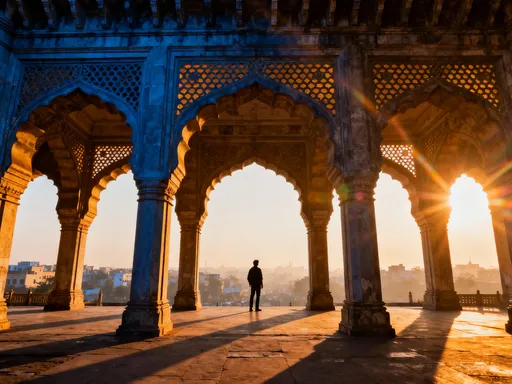
The Qutb Shahi dynasty, of Persian-Turkic origin, ruled the Deccan from the late 15th century and brought with them a refined sensibility that fused Persian elegance with Indian craftsmanship. Their architectural vision was both spiritual and civic-minded. They commissioned mosques, tombs, water systems, and urban layouts that reflected a deep understanding of climate, culture, and cosmology. The use of lime mortar, basalt stone, and perforated stone screens (jalis) wasn’t merely decorative—it responded to the region’s heat, allowing airflow while providing shade. Their buildings often followed a symmetrical plan centered around courtyards, a hallmark of Persian design adapted to South Indian conditions.
Perhaps the most enduring symbol of their legacy is the Charminar, constructed in 1591 by Sultan Muhammad Quli Qutb Shah. Legend holds that it was built to commemorate the end of a deadly plague, though historians also suggest it marked the founding of Hyderabad as the new capital. Positioned at the heart of the original city grid, the Charminar functioned as both a mosque and a monumental gateway. Its four grand arches face the cardinal directions, aligning with the city’s four main roads—an early example of intentional urban planning in India. The fusion of Islamic geometry with local materials and construction techniques set a precedent that would influence every era of Hyderabad’s architectural development.
What makes the Qutb Shahi period so foundational is not only the physical structures they left behind but the cultural synthesis they embodied. Their buildings avoided rigid imitation, instead adapting forms to suit local needs. This spirit of innovation and integration laid the groundwork for centuries of architectural evolution, making Hyderabad a rare example of layered urban identity where each dynasty added a new chapter without erasing the last.
Charminar: More Than a Postcard Icon
Standing at the center of one of India’s busiest intersections, the Charminar is often reduced to a backdrop for selfies and souvenirs. Yet, to see it only as a monument is to miss its living essence. Up close, the structure reveals intricate stucco work, arched balconies, and a quiet dignity that persists despite the chaos around it. The four towering minarets, each rising 48.7 meters, are crowned with bulbous domes and kalash finials—a subtle nod to Hindu architectural traditions, illustrating the cultural dialogue embedded in its design. The central chamber once housed a mosque on the upper floor, and today, prayers still echo within its walls, connecting past and present through ritual.
What truly sets the Charminar apart is its role as an urban anchor. The surrounding Laad Bazaar, famed for its bangles, and the sprawling markets of Pathargatti and Tolstoy Nagar, have grown organically around it for over four centuries. Walking through these lanes is a sensory immersion: the scent of jasmine garlands, the clink of glass bangles, the murmur of bargaining in Urdu and Telugu. The architecture here isn’t frozen in time—it’s part of a dynamic ecosystem where commerce, community, and culture intersect. Shopfronts tucked into centuries-old arcades sell everything from bridal wear to herbal remedies, proving that heritage can be both preserved and productive.
Preservation efforts have intensified in recent years, with the Archaeological Survey of India overseeing structural stability and pollution control. Vehicle emissions and vibrations from traffic posed serious threats, leading to the creation of a pedestrian-only zone around the monument. Restoration projects have carefully repaired weathered stucco and reinforced load-bearing walls using traditional materials like lime plaster, avoiding modern cement that can trap moisture and accelerate decay. These measures reflect a growing awareness that conservation isn’t just about saving stone—it’s about sustaining the social fabric that gives the place meaning.
The acoustics of the Charminar remain one of its most fascinating features. Whisper one word near the base of a minaret, and it carries clearly to the top—a phenomenon attributed to the precise curvature of the staircase and the density of the stone. Locals say lovers once used this to exchange secrets, though today it delights children and curious tourists alike. This blend of function, beauty, and human connection is what makes the Charminar more than a monument—it is a living landmark, pulsing with the rhythm of daily life.
The Asaf Jahi Grandeur: Palaces of the Nizams
If the Qutb Shahis laid the foundation, the Asaf Jahi dynasty—rulers known as the Nizams—built Hyderabad into a city of regal splendor. Ruling from 1724 until 1948, the Nizams were among the wealthiest men in the world, and their architectural ambitions matched their status. Their palaces were not just residences but statements of power, diplomacy, and cosmopolitan taste. Chief among them is the Chowmahalla Palace, a sprawling complex that served as the official seat of the Nizams. Its name, meaning “Four Palaces,” refers to the four grand courtyards arranged symmetrically around a central open space, reflecting Persian-inspired urban design while incorporating Indian craftsmanship.
The palace’s grandeur is evident in every detail. The Khilwat Mubarak, or Durbar Hall, features a majestic chandelier weighing over three tons and walls adorned with Belgian crystal mirrors and stucco reliefs. The flooring combines Italian marble with local black stone, creating geometric patterns that guide the eye toward the throne. What’s striking is how the architecture balances opulence with functionality: thick walls and high ceilings regulate temperature, while strategically placed vents create natural cross-ventilation, a necessity in Hyderabad’s hot climate. The palace was also one of the first in India to use a sophisticated underground water-cooling system, demonstrating the Nizams’ embrace of innovation alongside tradition.
Another architectural jewel from this era is Purani Haveli, originally gifted to the first Nizam by the Nizam of Awadh. Though much of the original structure has been repurposed, the surviving wing—the Nizam’s private residence—offers a glimpse into royal life. Its highlight is a 37-meter-long wardrobe, believed to be the longest in the world, built to house the Nizam’s vast collection of clothes. The building blends European neoclassical elements with Deccani craftsmanship: Corinthian columns stand beside carved wooden jharokhas, and French windows open onto courtyards filled with frangipani trees. The fusion reflects the Nizams’ global outlook—they maintained diplomatic ties with Britain, France, and the Ottoman Empire, and their palaces became canvases for cross-cultural expression.
The Asaf Jahi legacy also includes educational and civic institutions, such as the Nizam College and Darul Shifa hospitals, which integrated Indo-Saracenic styles with functional layouts. These buildings, often overlooked by tourists, reveal a commitment to public welfare that complemented their personal grandeur. The Nizams may have lived in palaces, but they also invested in infrastructure, libraries, and healthcare—values embedded in their architectural choices. Their era marked a transition from fortress cities to planned urban centers, setting the stage for modern Hyderabad.
Hidden Indo-Islamic Marvels Off the Beaten Path
Beyond the famous monuments lie quieter testaments to Hyderabad’s architectural richness—structures that have survived neglect, urban sprawl, and time. Toli Masjid, located in the Shah Ali Banda neighborhood, is one such gem. Built in 1671 by a nobleman named Ghulam Umar Shah, this mosque features a grand arched facade, a large central dome, and two slender minarets. Its prayer hall is supported by 24 intricately carved stone pillars, and the acoustics within are so precise that a whisper can be heard across the hall. The stucco work on the domes and arches includes floral patterns and Quranic calligraphy, executed with a delicacy that rivals any Mughal masterpiece.
What makes Toli Masjid remarkable is not just its beauty, but its resilience. Unlike state-protected sites, it has been maintained largely by the local community, who take pride in its upkeep. Weekly prayers, annual festivals, and neighborhood initiatives ensure that the mosque remains active and cared for. Yet, it remains absent from most tourist itineraries, a quiet sanctuary amidst the noise of the city. Its relative obscurity is both a blessing and a concern—blessing, because it avoids the wear of mass tourism; concern, because it risks being forgotten in official narratives.
Another overlooked site is Jama Masjid Darushifa, one of the oldest mosques in the city, dating back to the 17th century. Nestled in a narrow lane near the old hospital complex, it features a large courtyard, a mihrab with inlaid stone work, and a serene ambiance that contrasts with its urban surroundings. The mosque’s architecture follows the Deccani style with slight Persian influences, particularly in the dome’s proportions and the use of lime plaster. Its minaret, though shorter than those of Charminar, offers a commanding view of the neighborhood, a reminder of its historical role as both a place of worship and a watchtower.
Further north, in Sultan Bazar, several heritage buildings from the late 19th and early 20th centuries still stand—former merchant homes and trading offices with arched windows, teak wood balconies, and intricate iron grilles. Many are now repurposed as shops or offices, their facades weathered but still dignified. These structures represent a transitional phase when traditional design met emerging urban needs. They may lack the grandeur of palaces, but they speak to the everyday elegance of a city that valued beauty in both public and private life. Preserving these buildings requires not just restoration, but recognition—of their historical value and their role in shaping Hyderabad’s architectural identity.
Colonial Crossroads: British-Era Blends and Public Buildings
Though Hyderabad remained a princely state during British rule, it was not untouched by colonial influence. The late 19th and early 20th centuries saw the construction of civic buildings that blended British architectural styles with local traditions—a fusion known as Indo-Saracenic. This style, popular across India, sought to reconcile colonial authority with regional identity, using domes, arches, and minarets to evoke indigenous forms while maintaining European structural principles. In Hyderabad, this synthesis produced some of the city’s most dignified public buildings.
The Telangana High Court, originally built as the Hyderabad High Court during the Nizam’s rule with British collaboration, is a prime example. Its red sandstone façade, turrets, and pointed arches reflect Gothic Revival influences, while the central dome and jharokha-style balconies nod to Mughal and Deccani design. Inside, high ceilings, teak wood paneling, and stained glass windows create an atmosphere of solemnity and order. The building was designed not only to house justice but to project it—its architecture meant to inspire respect and authority. Today, it continues to serve its original purpose, a rare case of functional continuity in a rapidly changing city.
City College, established in 1879, is another landmark of this era. Its main building features a clock tower reminiscent of British civic architecture, yet the surrounding arcades and courtyards follow traditional Indian planning. The use of local stone and lime plaster ensured durability in the harsh climate, while large windows and high ceilings promoted ventilation. The college became a center of learning and reform, producing generations of scholars, lawyers, and leaders. Its architecture mirrored this mission—rooted in tradition, yet open to modern ideas.
Even utilitarian structures like the old telephone exchange and post offices from this period exhibit care in design. Arched entrances, decorative brickwork, and symmetrical layouts gave civic infrastructure a sense of dignity. These buildings remind us that public architecture shapes civic identity—when citizens interact with beautiful, well-built spaces, they internalize a sense of pride and order. The colonial era may have been politically complex, but its architectural legacy in Hyderabad is one of unexpected harmony, where foreign styles were adapted, not imposed.
Modern Expressions: Contemporary Architecture in a Historic City
Today, Hyderabad stands at an architectural crossroads. As a major IT hub and capital of Telangana, it is growing rapidly, with skyscrapers, metro lines, and smart city projects reshaping its skyline. Yet, unlike many Indian cities that sacrifice heritage for progress, Hyderabad has made deliberate efforts to integrate new developments with its historical fabric. The Telangana Secretariat complex, inaugurated in 2015, exemplifies this balance. Designed with input from local architects, the building incorporates traditional motifs such as jaali patterns and stepped profiles inspired by Deccani forts. Its façade uses locally sourced stone and energy-efficient glass, reducing heat absorption while maintaining aesthetic continuity.
The Hyderabad Metro Rail, one of India’s most extensive urban transit systems, also reflects thoughtful design. Elevated stations feature clean lines, ample natural light, and artwork depicting local culture—from Qutb Shahi calligraphy to Nizami textiles. Some stations, like those near Charminar and Sultan Bazar, were built with archaeological sensitivity, using temporary supports to avoid damaging underground heritage. The metro isn’t just functional; it’s a statement that modern infrastructure can be both efficient and beautiful.
Sustainable architecture is gaining ground in private developments as well. New residential and commercial buildings increasingly use passive cooling techniques, rainwater harvesting, and solar panels—modern interpretations of traditional wisdom. Courtyards, once central to palace design, are reimagined in apartment complexes to promote airflow and community. Architects are rediscovering the value of thick walls, shaded walkways, and natural materials, proving that old solutions can address new challenges.
This dialogue between past and present is what makes contemporary Hyderabad unique. Growth doesn’t have to mean erasure. When new buildings respect scale, materiality, and cultural context, they become part of the city’s ongoing story rather than interruptions to it. The challenge lies in maintaining this balance as development accelerates—ensuring that progress doesn’t come at the cost of identity.
Why Hyderabad’s Architecture Deserves Global Attention
Hyderabad’s built environment is more than a collection of monuments—it is a living narrative of resilience, adaptation, and cultural synthesis. From the military precision of Golconda to the civic grace of colonial institutions and the innovative spirit of modern design, the city offers a rare continuity of architectural expression. What sets it apart is not just the beauty of individual structures, but the way they coexist, layer upon layer, telling a story of unity in diversity.
This architectural richness deserves global recognition, not merely for tourism, but for what it teaches about urban identity. In an age of homogenized skylines and disposable design, Hyderabad shows that cities can grow without losing their soul. Its heritage buildings are not relics—they are active participants in daily life, hosting markets, prayers, and communities. This integration of past and present fosters a deep sense of belonging, especially among residents who see their history reflected in the streets they walk.
Tourism can play a vital role in preservation, but it must be thoughtful. Overcrowding and commercialization threaten the authenticity of places like Charminar and Laad Bazaar. Sustainable tourism models—guided heritage walks, community-led tours, and digital storytelling—can help share the city’s story without overwhelming it. Schools and universities can also play a role by teaching local youth about their architectural heritage, fostering pride and stewardship.
Ultimately, Hyderabad’s architecture invites us to look deeper. It asks us to move beyond the surface, to notice the stucco work on a forgotten mosque, the symmetry of a palace courtyard, the quiet dignity of a colonial-era post office. These are not just buildings—they are keepers of memory, witnesses to time, and blueprints for a future that honors the past. To explore Hyderabad is to witness how a city can evolve without forgetting who it is. And in that balance lies its true marvel.