You Won’t Believe What I Ate in Baucau
I went to Baucau expecting quiet streets and mountain views, but what blew me away was the food. This isn’t just about rice and chili—Baucau’s local cuisine is a full sensory explosion. From smoky grilled fish at roadside stalls to rich, slow-cooked stews flavored with native herbs, every bite tells a story. I didn’t just eat here—I connected. If you think East Timor’s cuisine is simple, think again. It’s bold, fresh, and deeply authentic. Let me take you through the flavors no tourist guide mentions.
First Impressions: A City That Feels Alive
Baucau greets visitors with a gentle rhythm, a contrast to the bustling capital Dili. Nestled along the northern coast and rising into the hills, the city carries traces of its Portuguese colonial past in weathered facades and wide, tree-lined avenues. The air is cooler here, kissed by mountain breezes that drift down from the central highlands. Upon arrival, the first thing that strikes you isn’t the architecture or the scenery—it’s the smell. A blend of woodsmoke, roasting corn, and simmering coconut milk lingers in the streets, drawing you toward clusters of activity near the market and the central square.
Many travelers come to Baucau as a brief stopover or for its scenic viewpoints, but few anticipate how quickly food becomes the heartbeat of the experience. I had planned to explore churches and coastline, yet within hours, my itinerary shifted. The scent of grilled fish pulled me to a cluster of bamboo-covered stalls where locals gathered in the late afternoon. Children laughed as they balanced bowls of steaming porridge, and elders sipped coffee from chipped enamel mugs. It was clear: in Baucau, life unfolds around food.
The Mercado Municipal, or central market, is where this culinary journey truly begins. More than just a place to buy ingredients, it’s a living archive of East Timorese culture. Women in brightly woven *tais* fabric arrange baskets of taro, bundles of banana leaves, and heaps of red and yellow chilies. Fishermen lay out the morning’s catch—snapper, mackerel, and squid—on banana leaves, their glistening scales catching the sunlight. The market isn’t polished or tourist-oriented; it’s raw, vibrant, and honest. It sets the tone for a kind of travel that values authenticity over convenience, connection over spectacle.
The Heart of Baucau’s Flavors: Traditional Ingredients and Techniques
At the core of Baucau’s cuisine are ingredients grown in harmony with the land. Corn, cassava, and taro form the foundation of most meals, serving as both staple and sustenance. These crops thrive in the region’s volcanic soil and are often harvested by hand, reflecting a deep relationship between people and their environment. Seafood, caught daily from the nearby Wetar Strait, adds protein and flavor, while free-range chickens, raised in backyards and allowed to forage freely, provide tender, richly flavored meat that bears no resemblance to factory-farmed poultry.
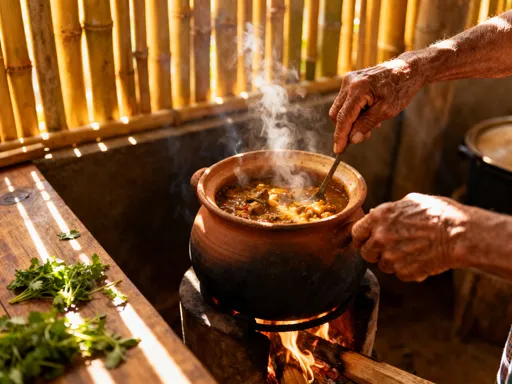
What makes these ingredients shine is the traditional cooking methods passed down through generations. Open-fire grilling is perhaps the most common technique, especially for fish and chicken. Skewered and brushed with a simple marinade of lime, garlic, and chili, the food is cooked over coconut husks or hardwood, giving it a smoky depth that gas stoves cannot replicate. Clay-pot cooking is another hallmark, used for stews like *tinumusu*—a hearty dish combining meat, vegetables, and coconut milk, slow-simmered until the flavors meld into a comforting harmony.
Equally important are the herbs and spices that elevate these dishes. Turmeric, ginger, and lemongrass are widely used, not only for flavor but also for their digestive and anti-inflammatory properties. One of the most distinctive is *loro husi*, or chili leaf, a slightly bitter green with a peppery kick that locals fold into stews or serve raw alongside meals. These ingredients are rarely measured; instead, they’re added by instinct, shaped by memory and family tradition. The result is food that feels personal, not standardized—a reflection of identity as much as nutrition.
Street Food Gems: Where Locals Eat
If you want to taste the soul of Baucau, follow the locals to the street food stalls that spring up at dusk. These unassuming setups—often just a metal table, a charcoal grill, and a few plastic stools—are where the city’s culinary magic happens. They’re not listed in guidebooks, and they don’t accept credit cards, but they offer some of the most honest and delicious food you’ll ever eat. The atmosphere is warm and inclusive, with vendors greeting regulars by name and newcomers with a curious smile.
One must-try dish is *kapurung*, a traditional Timorese specialty that’s especially popular in Baucau. It’s a complex dish made from sago palm starch, shaped into translucent dumplings and served in a savory broth with shredded chicken, vegetables, and a splash of tamarind. The texture is unique—chewy yet delicate—and the broth carries a depth of flavor built from slow cooking and careful seasoning. Another favorite is *ikan bakar*, or grilled fish, often whole and stuffed with lemongrass and chili before being charred over hot coals. Served with a side of *kakerek*, a spiced corn porridge, it’s a meal that satisfies both hunger and curiosity.
For first-time visitors, eating street food can feel intimidating, especially when hygiene standards differ from what one might expect at home. However, a few simple practices can ensure a safe and enjoyable experience. Look for stalls with high turnover—busy spots mean fresh food. Observe whether the vendor uses clean utensils and covers ingredients when not in use. Drinking bottled water and avoiding raw salads can also reduce risk. Most importantly, trust your instincts. If a place feels clean and welcoming, and the food smells fresh, it’s likely a good choice. In Baucau, food safety isn’t about sterile conditions; it’s about respect—for ingredients, for preparation, and for the people who share their meals with you.
Home-Cooked Magic: A Meal with a Local Family
One of the most profound moments of my trip came not in a market or restaurant, but at a simple wooden table in a family home on the outskirts of Baucau. After striking up a conversation with a vendor at the market, I was invited to join her family for lunch—an unexpected gesture of hospitality that I will never forget. The house, built from concrete and corrugated iron, was modest, but the warmth inside was overwhelming. Children played barefoot in the yard, and the air was filled with the rhythmic pounding of a mortar and pestle as the grandmother prepared a paste of chilies, garlic, and turmeric.
The meal was a celebration of tradition. Dishes were laid out on banana leaves: a clay pot of *tinumusu* with chicken and pumpkin, a bowl of boiled cassava, grilled fish wrapped in banana leaves, and a fresh salad of cucumber and tomato dressed with lime. Everything was served family-style, with no strict order or course structure. We ate with our hands, as is customary, washing our fingers in small bowls of water before and after. The mother explained that sharing food this way is more than a meal—it’s an act of unity, a way of reinforcing family bonds and honoring ancestors.
What struck me most was the pride with which the food was presented. There was no pretense, no attempt to impress. Instead, there was deep respect for the process—from planting the crops to preparing the meal. When I complimented the stew, the grandmother smiled and said, “This is how my mother taught me. Now I teach my daughter.” In that moment, I wasn’t just a guest; I was part of a story much larger than myself. Eating in someone’s home in Baucau isn’t about sampling exotic flavors—it’s about being welcomed into a way of life where food is love, memory, and continuity.
Coffee Culture and Afternoon Rituals
Baucau sits in one of East Timor’s prime coffee-growing regions, and coffee is more than a drink here—it’s a legacy. The country’s high-altitude farms produce some of the finest Arabica beans in Southeast Asia, grown without chemicals and harvested by hand. Coffee has been cultivated in Timor for over two centuries, introduced during the colonial era but now deeply woven into the fabric of daily life. In Baucau, nearly every household grows a few coffee trees, and the afternoon coffee break is a sacred pause in the day’s rhythm.
I had the privilege of visiting a smallholder farm just outside the city, where a farmer named Domingos walked me through the entire process. The beans are picked, pulped, and then sun-dried on raised bamboo beds, turning them regularly to ensure even drying. Domingos roasted a small batch over a low flame, filling the air with a rich, nutty aroma. He brewed the coffee in a traditional cloth filter, letting the dark liquid drip slowly into a chipped enamel cup. The taste was clean and bright, with notes of cocoa and citrus, far removed from the bitter, over-roasted versions found in many urban cafes.
Drinking coffee in Baucau is never rushed. It’s a moment to sit, to talk, to breathe. Whether in a home, a roadside stall, or under the shade of a mango tree, the ritual brings people together. I found myself joining elders in quiet conversation, sipping slowly, listening to stories of harvests past and hopes for the future. In a world that often values speed over presence, Baucau’s coffee culture is a gentle reminder of the beauty in slowing down. It’s not just about caffeine—it’s about connection, one cup at a time.
Balancing Adventure and Authenticity: Practical Tips for Food Travelers
For those inspired to explore Baucau’s culinary landscape, timing can make all the difference. The best period to visit is between May and November, during the dry season, when roads are passable and outdoor markets are in full swing. This is also the time of year when local harvests—corn, cassava, and coffee—are at their peak, offering the freshest ingredients and the most vibrant food culture. If possible, plan your trip around a community festival, such as the coffee harvest celebrations in August, where you can witness traditional dances, sample seasonal dishes, and meet farmers directly.
Engaging respectfully with local vendors is key to a meaningful experience. While Tetum and Portuguese are the official languages, many people in Baucau speak some Indonesian or basic English. A simple “Boa tarde” (good afternoon) or “Obrigada” (thank you) goes a long way. When trying a new dish, point and smile if words fail—most vendors are happy to explain what they’re serving. Never photograph food or people without permission; instead, show interest through questions and appreciation. A sincere compliment about the flavor or presentation can brighten someone’s day and open the door to deeper interaction.
Transportation in Baucau is relatively straightforward. The city is walkable, especially the central areas, but for visiting markets or rural farms, hiring a local driver or using a motorcycle taxi (known as *mototaxi*) is practical. Budgeting is simple—meals at street stalls cost just a few dollars, and even a home-cooked meal with a family rarely exceeds ten. The key is to travel lightly, stay open-minded, and embrace the unexpected. Language barriers can be overcome with patience and gestures; what matters most is the willingness to connect. In Baucau, kindness is the universal language.
Why Baucau’s Cuisine Deserves Global Attention
East Timorese cuisine remains one of Southeast Asia’s best-kept secrets. While neighboring countries like Thailand, Vietnam, and Indonesia dominate global food conversations, Timor-Leste’s culinary traditions have flown under the radar. Yet, what Baucau offers is something rare: food that is uncomplicated, honest, and deeply rooted in place. There are no fusion experiments or Instagram-driven trends—just generations-old recipes made with care and shared with pride. In a region known for bold flavors, Timorese food stands out not for complexity, but for its integrity.
Yet, this authenticity is not guaranteed to last. As urbanization accelerates and imported processed foods become more accessible, younger generations are beginning to shift away from traditional diets. Supermarkets now stock instant noodles and canned goods, and fast food outlets are slowly appearing in Dili. In rural areas like Baucau, the old ways persist, but they face growing pressure. The knowledge of how to prepare *kapurung* or roast coffee over wood fires risks being lost if not passed down and valued.
This is where sustainable tourism can play a vital role. When travelers seek out local markets, eat at family-run stalls, and visit small farms, they support an economy that honors tradition rather than replacing it. Every dollar spent on authentic food is a vote for preservation. Moreover, the act of sharing a meal creates mutual respect—it tells local communities that their way of life is seen, appreciated, and worthy of protection. Baucau’s cuisine doesn’t need to be “discovered” in the colonial sense; it needs to be respected, sustained, and celebrated on its own terms.
Conclusion
Baucau isn’t just a stopover—it’s a culinary revelation. Eating here isn’t passive; it’s a conversation with history, land, and people. From the smoky grills of the market to the quiet rituals of a family lunch, every meal carries meaning. The ingredients are simple, but the experience is profound. In a world where food is often mass-produced and rushed, Baucau reminds us of what we’ve forgotten: that cooking is an act of care, and eating can be an act of connection.
By choosing to taste the real—by sitting at a plastic stool, sharing a meal with strangers, learning the name of a herb from a grandmother—we help keep these traditions alive. We don’t need to change Baucau’s food to appreciate it. We simply need to show up, eat with gratitude, and listen. So next time you plan a trip, ask: what does this place really taste like? Then go find out. The answer might just change the way you think about food—and about home.