You Won’t Believe These Hidden Viewpoints in Trincomalee
Trincomalee, nestled on Sri Lanka’s east coast, is more than just golden beaches and turquoise waters. I went searching for peace—and stumbled upon viewpoints so stunning, they rewired my idea of beauty. From cliffside lookouts to quiet temple heights, each spot offered a new perspective, literally and emotionally. This isn’t just sightseeing—it’s soul-finding. Let me take you to the places that left me speechless, where the ocean stretches forever and time slows down.
Discovering Trincomalee: Beyond the Postcard
Trincomalee, often called “Trinco” by locals and travelers alike, has long been celebrated for its sweeping bay, one of the largest natural harbors in the world. Its reputation centers on sun-drenched shores, swaying palms, and the gentle rhythm of coastal life. Yet beyond the postcard-perfect beaches lies a quieter, more elevated truth—one that reveals itself only to those who look up, climb higher, and wander beyond the well-trodden paths. The real magic of Trincomalee unfolds not just at sea level, but from vantage points where the land meets sky and the ocean becomes an endless horizon.
Viewpoints are more than scenic stops; they are moments of pause, clarity, and connection. In a world that moves quickly, standing atop a windswept cliff with nothing but the sound of waves far below offers something rare: stillness. These elevated spaces invite reflection, not just about the landscape, but about our place within it. Trincomalee’s lookouts are layered with meaning—natural beauty intertwined with centuries of history, spiritual devotion, and cultural resilience. They are not just for photographers seeking the perfect shot, but for anyone longing to see the world differently.
What makes Trincomalee’s viewpoints especially powerful is their diversity. Some rise from ancient rock formations sacred for generations. Others emerge from coral-fringed islets where the sea sparkles in every direction. There are colonial-era fortifications turned into peaceful observation decks, and hidden hillside trails known only to locals. Each offers a distinct lens through which to experience this coastal gem. By seeking these elevated perspectives, travelers do more than expand their itinerary—they deepen their understanding of a place shaped by tides, time, and tradition.
Swami Rock: Where the Ocean Meets the Divine
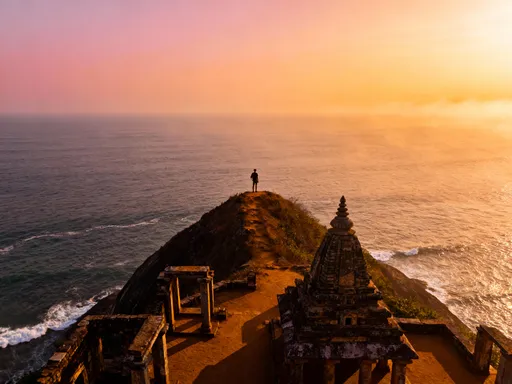
Rising dramatically 120 meters above the Indian Ocean, Swami Rock—known locally as Koneswaram Rock—is one of Trincomalee’s most awe-inspiring natural and spiritual landmarks. This sheer cliff forms the easternmost point of the peninsula and serves as the foundation for the historic Koneswaram Temple, a sacred Hindu site with roots stretching back over two millennia. The temple itself is a place of devotion, but the surrounding cliffs offer something equally profound: a panoramic view so vast it feels otherworldly. Standing at the edge, with the ocean stretching endlessly in every direction, one cannot help but feel both insignificant and deeply connected to the universe.
The duality of Swami Rock is part of its power. It is simultaneously a place of deep religious significance and breathtaking natural beauty. Pilgrims come to offer prayers at the temple, their voices blending with the wind and waves below. Travelers come for the view, often unaware of the spiritual weight carried by the stone beneath their feet. Yet when you stand there, feeling the sun on your skin and the ocean spray in the air, the boundary between the sacred and the scenic begins to blur. This is not merely a tourist stop—it is a space where nature and faith coexist in harmony.
For the best experience, timing is essential. Sunrise is a particularly powerful moment at Swami Rock. As the first golden rays illuminate the temple spires and reflect off the water, the entire bay glows with a soft, ethereal light. The crowds are thinner in the early morning, allowing for a more contemplative visit. Late afternoon also offers beautiful lighting, though the site tends to be busier with local families and pilgrims. Visitors should exercise caution near the cliff edges, especially in windy conditions or when photographing. There are no protective barriers in many areas, so mindfulness is key. Despite the risks, the reward—a view that spans the horizon with nothing but sea and sky—is unmatched.
Pigeon Island: A View from the Coral Crown
Just off the coast near Nilaveli Beach lies Pigeon Island National Park, a protected coral island that offers one of the most unique vantage points in Trincomalee. Unlike mainland viewpoints, Pigeon Island provides a 360-degree panorama of the Indian Ocean, where the water shifts from deep blue to translucent turquoise depending on the sun’s angle. The island itself is small—less than a kilometer long—but its elevated coral outcrops offer sweeping views that make it feel expansive. From these natural lookouts, the surrounding reef becomes visible, pulsing with life just beneath the surface.
What sets Pigeon Island apart is that its most stunning views are not only above water but beneath it. Snorkeling here is like floating through an underwater observatory. The coral gardens are among the healthiest in Sri Lanka, hosting vibrant schools of tropical fish, sea turtles, and even reef sharks in deeper areas. This dual-layered experience—seeing the ocean from above and diving into its depths—creates a rare sense of immersion. The island’s nickname, “the coral crown,” is well earned, as it sits atop a living reef system that has thrived despite regional environmental challenges.
Access to Pigeon Island is by boat, typically arranged through local tour operators in Nilaveli or Uppuveli. The journey takes about 20 to 30 minutes, depending on sea conditions. A permit is required for entry, which is usually included in the tour fee. To protect the fragile ecosystem, visitors are asked to avoid touching the coral, refrain from feeding fish, and use reef-safe sunscreen. The best visibility for snorkeling occurs between April and September, when the seas are calm and the water is clear. During these months, the underwater viewpoints are at their most vivid, revealing colors and movements that feel almost unreal.
Kanniya Hot Springs: A Soothing Perspective
Near the outskirts of Trincomalee town lies a lesser-known but deeply meaningful viewpoint—not of the ocean, but of inner stillness. The Kanniya Hot Springs consist of seven stone-lined pools fed by natural thermal waters that maintain a warm temperature year-round. While not elevated in the physical sense, these springs offer a different kind of outlook: one that emerges from warmth, quiet, and centuries of tradition. Locals believe the waters have healing properties, a belief rooted in both Ayurvedic practices and oral history. Bathing here is not a tourist spectacle, but a gentle, grounding experience that invites introspection.
The temperature of the water ranges between 40 and 46 degrees Celsius, making it comfortably warm without being scalding. Each pool varies slightly in heat, allowing visitors to choose their preferred level of warmth. The site is modestly developed, with basic changing facilities and shaded resting areas. Unlike commercial spas, Kanniya retains a sense of authenticity and simplicity. Families, elders, and travelers alike come to soak, relax, and reflect. The atmosphere is peaceful, often accompanied only by the soft murmur of conversation and the occasional splash of water.
There are cultural considerations to keep in mind. Bathing is typically done in modest clothing—swimsuits or light cotton garments—rather than swimwear. Respect for local customs enhances the experience, turning a simple dip into a moment of cultural connection. The hot springs do not offer dramatic ocean vistas, but they provide something equally valuable: a chance to slow down, listen to your body, and gain a new perspective from within. In a journey filled with high cliffs and sweeping horizons, Kanniya reminds us that the most transformative views are not always the ones we see with our eyes.
Forts and Ruins: Colonial Echoes with Panoramic Rewards
Scattered across Trincomalee’s coastline are the remnants of colonial ambition—stone fortifications built by the Portuguese, Dutch, and British, each constructed on high ground to oversee the strategic harbor below. Among them, Fort Frederick stands as the most prominent, a star-shaped structure dating back to the 17th century. Though much of it remains under military use, parts of the fort are accessible to visitors and offer commanding views of Trincomalee Bay, the city, and the distant coastline. Walking along its weathered ramparts, one can trace the arc of history while enjoying a vista that has guided empires and explorers alike.
The appeal of these forts lies not just in their history, but in their elevation. Positioned deliberately on hills and promontories, they were designed for surveillance and defense. Today, they serve as peaceful observation points where the past and present converge. From Fort Frederick, the morning sun casts long shadows across the water, illuminating fishing boats as they return with the day’s catch. In the evening, the same spot becomes a favorite for locals to gather, chat, and watch the sky turn gold and crimson. The fort’s vantage point transforms with the light, offering a new experience at every hour.
Beyond Fort Frederick, smaller ruins dot the coastline—crumbling watchtowers, forgotten bastions, and overgrown pathways that hint at a layered past. Some require a short hike to reach, but the effort is rewarded with solitude and unobstructed views. These sites are rarely crowded, allowing for quiet contemplation. Combining a visit with a historical walking tour enhances understanding, as guides often share stories of the various powers that once ruled Trincomalee. Whether at sunrise or sunset, these colonial-era lookouts offer more than scenery—they offer a sense of continuity, reminding us that while empires fade, the view endures.
Hidden Hillside Paths: Off-the-Beaten-Track Lookouts
Between the popular beaches of Uppuveli and Neelaveli, a network of informal footpaths winds through scrubland, coconut groves, and rocky outcrops, leading to secluded coastal viewpoints known mostly to locals. These hidden trails are not marked on maps, nor promoted by tour operators, yet they offer some of the most authentic and serene vantage points in Trincomalee. Unlike the structured sites of temples and forts, these spots are raw and unfiltered—places where nature reclaims the edges, and the only sound is the wind and the distant crash of waves.
One such path begins behind a small wayside shrine near the road between the two beaches. Following it uphill, the trail narrows, flanked by wild herbs and flowering shrubs. After a ten-minute climb, it opens onto a flat rock ledge overlooking a quiet cove where few swimmers venture. From here, the curvature of the bay unfolds like a living map. On clear days, the silhouette of Pigeon Island is visible in the distance. Seabirds glide along the thermal currents, and if you sit quietly, you may spot a monitor lizard basking on a sunlit rock. These moments of solitude are rare in more tourist-heavy areas, making the effort to find them deeply rewarding.
Exploring these paths requires preparation. Sturdy footwear is recommended, as some sections are rocky or slippery, especially after rain. Carrying water and wearing a hat is wise, given the tropical sun. While it’s possible to explore independently, hiring a local guide from a nearby guesthouse ensures both safety and cultural respect. Guides often know the safest routes and can share stories about the land and its people. These hidden lookouts do not offer facilities or signage, but that is part of their charm. They are places of discovery, not convenience—reminders that beauty often lies just beyond the beaten path.
Chasing Light: When and How to Experience the Views Fully
To truly appreciate Trincomalee’s viewpoints, one must consider not just where to go, but when. Light transforms each location in subtle but powerful ways, altering colors, shadows, and moods. Sunrise at Swami Rock casts a golden glow over the temple and ocean, creating a spiritual ambiance that lingers long after the sun has risen. Midday light, though harsh on the skin, brings out the vivid blues and greens of Pigeon Island’s waters, making it the ideal time for snorkeling and underwater photography. As the sun lowers, the golden hour drapes the bay in warm, soft light, perfect for capturing the lagoon’s gentle ripples and the silhouettes of fishing boats returning home.
Weather patterns play a crucial role in planning. Trincomalee’s dry season, from May to September, offers the clearest skies and calmest seas, making it the best time for both land-based and water-based exploration. During the northeast monsoon, from October to January, some coastal areas may be affected by rough waves and wind, limiting access to certain viewpoints. However, even in the shoulder months, brief windows of calm often appear, rewarding patient travelers with dramatic cloudscapes and powerful waves crashing against the cliffs.
For those interested in photography, a few simple tips can enhance the experience without requiring technical expertise. A polarizing filter helps reduce glare on water surfaces, revealing more detail beneath. Shooting during the “blue hour”—just before sunrise or after sunset—adds depth to skyline shots. But perhaps the most important advice is to put the camera down. Some of the most profound moments occur when you simply stand still, breathe, and take in the view with your own eyes. Technology can capture an image, but only presence can capture a feeling. In Trincomalee, the best photographs are often the ones stored in memory.
Conclusion: Why Viewpoints Change Us
Trincomalee’s hidden viewpoints do more than showcase beautiful scenery—they shift something within us. Standing at the edge of a cliff, floating above a coral garden, or soaking in warm mineral waters, we are reminded of the vastness of the world and the quiet strength of stillness. These elevated places offer more than visual rewards; they provide emotional clarity, a chance to reset, and a deeper connection to nature and history. In a single journey, one can witness the power of the ocean, the resilience of ancient traditions, and the enduring beauty of untouched landscapes.
The act of seeking high ground—whether literal or metaphorical—has long been associated with insight. Philosophers have climbed mountains for inspiration. Pilgrims have ascended sacred rocks for blessings. Today’s travelers, too, find that elevation brings perspective. In Trincomalee, every viewpoint tells a story: of geology and time, of culture and continuity, of light and transformation. These places do not shout for attention; they whisper, inviting those who listen to slow down, look closely, and see anew.
As you plan your journey to Sri Lanka’s east coast, consider not just where you will go, but how you will see. Let Trincomalee’s hidden lookouts guide you beyond the surface. Seek the quiet paths, the early mornings, the moments of solitude. Allow the heights to lift not just your gaze, but your spirit. For in the end, the most unforgettable views are not the ones we photograph—but the ones that quietly change us from within.