You Won’t Believe What I Discovered in Cebu’s Hidden Cultural Corners
Cebu isn’t just beaches and island hopping—there’s a whole other side pulsing with life, rhythm, and centuries-old soul. I went looking for adventure and found something deeper: real traditions, warm smiles, and stories woven into every street corner and festival dance. From centuries-old churches to local artisans keeping ancient crafts alive, Cebu’s culture hit me in ways I never expected. This is more than a vacation—it’s a connection. And you gotta experience it too.
First Glimpse: Stepping Into Cebu’s Living Culture
Arriving in Cebu City feels like stepping into a living timeline where colonial echoes coexist with modern Filipino energy. The streets hum with jeepneys painted in bold colors, their horns blending with the distant chime of church bells. Spanish-era buildings with weathered coral stone walls stand beside sleek cafes and corner sari-sari stores where children buy bottled soft drinks after school. It’s a city that remembers its past without being trapped by it. What struck me most wasn’t the architecture or traffic, but the warmth embedded in everyday interactions—a vendor offering a sample of sweet cassava cake, an elder nodding politely as he passed by with a woven bag slung over his shoulder.
The sensory experience begins the moment you step off the plane. The air carries the rich, smoky aroma of lechon—Cebu’s famed roasted pig—drifting from nearby carinderias. In the early evening, the beat of drums pulses faintly in the distance, a preview of the Sinulog Festival’s rhythm that seems to live in the island’s bloodstream year-round. Colorful parol lanterns, some handmade with capiz shells and bamboo, hang in windows and doorways, especially during the holiday season. These aren’t staged for tourists; they’re part of daily life, expressions of faith, celebration, and identity passed down through generations.
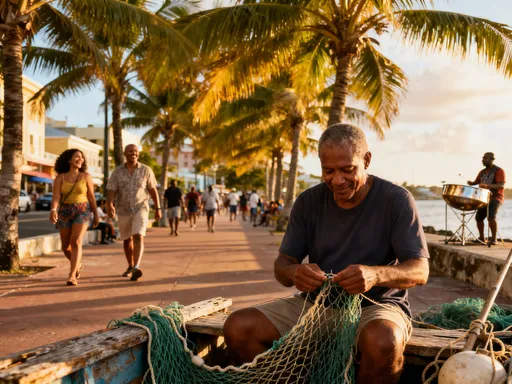
At first glance, one might mistake these traditions for performances curated for visitors. But spending just a few days in Cebu reveals the truth: this culture is not performed—it is lived. The elderly woman lighting a candle at a roadside shrine, the children practicing dance steps in a barangay hall after school, the fisherman offering a small prayer before heading out to sea—these are not acts. They are moments of continuity, threads connecting present-day Cebuanos to ancestors who walked the same shores centuries ago. To witness this is to understand that Cebu’s soul runs deeper than its coastline.
The Heartbeat of Tradition: Sinulog and the Spirit of Santo Niño
No single event captures the spirit of Cebu more powerfully than the Sinulog Festival, held every January in honor of the Santo Niño, the Child Jesus. While many know it for its grand parade—thousands of dancers in vibrant costumes moving to hypnotic drumbeats—the true essence lies in the quiet moments before dawn, when the streets are still and the faithful gather at the Basilica Minore del Santo Niño for early Mass. Here, devotion is palpable. Women clutch rosaries, men bow their heads, and children stand solemnly beside parents who have made this pilgrimage for decades. This is not spectacle. It is worship. It is memory. It is identity.
The Santo Niño’s presence in Cebu dates back to 1521, when Ferdinand Magellan presented the statue to Queen Juana as a baptismal gift. Since then, it has become more than a religious icon—it’s a symbol of survival, resilience, and cultural fusion. Over centuries, Catholicism intertwined with indigenous beliefs, creating a unique spiritual expression that defines much of Cebuano life. Locals speak of the Santo Niño not just as a saint, but as a protector, a family member, a source of hope during hard times. One woman I spoke with, Maria, shared how her grandmother kept a small replica in a wooden chest, bringing it out only during times of illness or crisis. “He’s always been there,” she said. “Even when we had nothing, we had faith.”
What makes Sinulog so transformative for visitors is how deeply personal it feels, even for outsiders. Joining the crowd during the Fluvial Procession, where a flotilla of boats carries the Santo Niño image across the bay at sunrise, evokes a sense of reverence that transcends language. The synchronized chanting of “Viva Pit Senyor!” rises over the water, a wave of devotion echoing across generations. Even if you don’t understand every word, you feel the weight of it—the gratitude, the joy, the collective memory. Experiencing even a small part of Sinulog changes your perspective on what travel can be. It’s not just about seeing new places. It’s about feeling something real.
And while the festival draws hundreds of thousands, the spirit of Sinulog lives on outside the month of January. In homes, the Santo Niño statue sits on altars adorned with flowers and candles. In schools, children learn the history behind the dance. In churches, novenas are held every third Sunday of the month. This ongoing devotion reminds us that culture is not something you visit—it’s something that breathes, evolves, and endures. For those willing to look beyond the parade, Sinulog offers a rare glimpse into the heart of a people whose faith is both spiritual and cultural, deeply rooted and joyfully alive.
Crafting Heritage: Meeting Artisans in Barangay Workshops
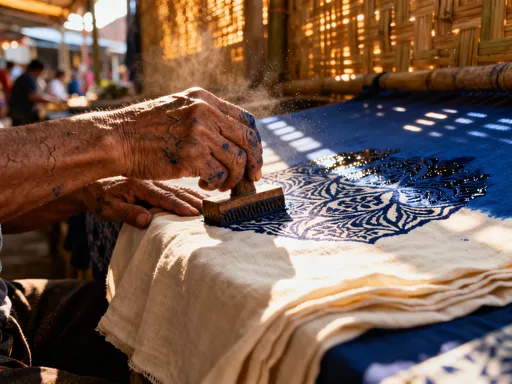
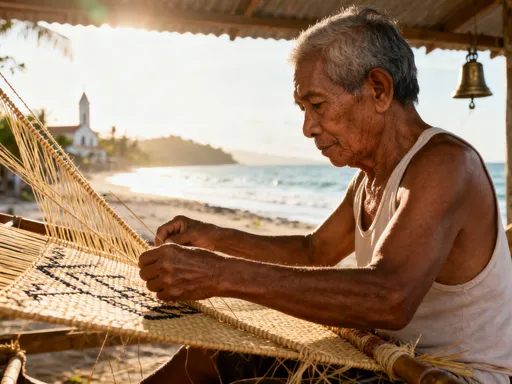
Just a short drive from the city, along the coastal barangays of southern Cebu, another kind of rhythm unfolds—one of hands moving with quiet precision over natural fibers. In a small village near Argao, I visited a women-led cooperative dedicated to weaving banig, traditional sleeping mats made from tikog or buri palm leaves. The workshop sat under a bamboo pavilion, open to the sea breeze, where six women worked side by side, their fingers deftly threading strips of dyed palm into intricate geometric patterns. Each mat tells a story—some inspired by waves, others by mountains or ancestral symbols passed down through oral tradition.
I was invited to try my hand at the craft, and within minutes, I realized how deceptively difficult it was. The women laughed kindly as I struggled to keep the tension even, but they encouraged me to keep going. “It takes years,” said Lourdes, the group’s leader, “but every mistake teaches you something.” She explained how the dyes came from natural sources—turmeric for yellow, indigo for blue, and almaciga resin for deep brown. No chemicals. No machines. Just knowledge preserved through generations. Her daughter, now in her twenties, sits beside her every weekend, learning the same techniques her grandmother once taught.
These artisans aren’t just making souvenirs. They’re preserving a piece of indigenous identity that risks fading in the face of mass production and urban migration. Many young people leave for cities or overseas jobs, leaving fewer hands to carry on the work. Yet, the cooperative has found strength in unity. They now sell their mats through local eco-tourism networks and social media, ensuring fair prices and direct income. One traveler purchasing a single mat might not realize it, but they’re helping sustain a family, a tradition, and a way of life.
Sustainable tourism plays a vital role here. When travelers seek out authentic experiences—like visiting a workshop, learning a few weaving basics, or buying directly from makers—they contribute to cultural preservation in the most meaningful way. It’s not about pity or charity. It’s about respect. It’s about recognizing that every pattern woven into a banig carries history, skill, and pride. And by supporting these artisans, visitors become part of that legacy, not just observers of it.
Flavors That Tell Stories: Eating Like a True Cebuano
To taste Cebu is to taste its history. The island’s cuisine is a tapestry of Malay roots, Spanish influence, Chinese trade, and indigenous resourcefulness. While lechon may be the most famous export—crispy-skinned, herb-stuffed, and slow-roasted over charcoal—it’s only the beginning. One morning, I followed a local guide to a talipapa, a bustling wet market where fishermen unload the day’s catch and farmers sell fresh produce from nearby hills. The air was thick with salt, garlic, and the tang of fermenting fish. Vendors called out prices, their voices rising above the clatter of scales and chopping boards.
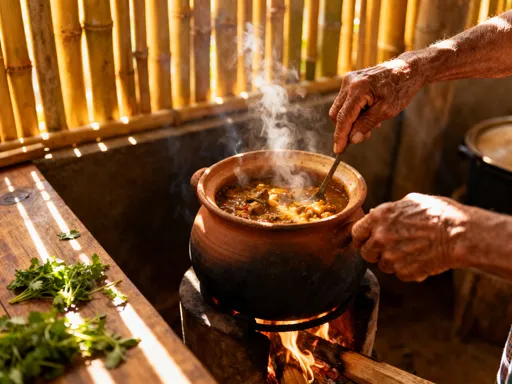
There, I discovered kinilaw—a Cebuano ceviche made with fresh tuna or mackerel, marinated in vinegar, calamansi juice, ginger, and siling labuyo (tiny chili peppers). Unlike Mexican ceviche, kinilaw is often served warm from the residual heat of the ingredients, giving it a bold, spicy kick. I watched as an older woman prepared it in a wooden bowl, explaining that her mother taught her to adjust the vinegar based on the fish’s freshness. “You don’t follow a recipe,” she said. “You follow your senses.” That philosophy runs deep in Cebuano cooking: intuitive, adaptive, and deeply personal.
Later, I was invited to a family home in a rural village, where we ate puso—rice cooked in woven palm leaves—served with grilled danggit (rabbitfish) and a side of pickled papaya. The meal was shared on a low wooden table under a nipa hut, the kind of bahay kubo that still dots the countryside. As we ate, the grandmother told stories of how her family survived lean years by relying on the sea and their garden. Food, she said, was never just about hunger. It was about care, connection, and gratitude. Even simple meals were occasions to gather, to give thanks, to remember who you are.
For travelers, the key to authentic Cebuano food is to step away from the tourist zones. Skip the overpriced lechon restaurants near the airport. Instead, visit neighborhood carinderias, follow locals to market stalls, or accept an invitation to a home. Ask questions. Learn a few words—“Pa-ano ni?” (How do you make this?) or “Salamat!” (Thank you!). These small gestures open doors. And when you sit down to eat with a Cebuano family, you’re not just tasting food. You’re tasting memory, resilience, and love.
Voices of the Island: Music, Dance, and Community Life
One evening, while walking through a quiet town plaza in Carcar, I heard the soft strum of a guitar. A small group had gathered under a streetlight—a few teenagers, an elderly couple, and a young man singing in Cebuano. It was a harana, a traditional serenade, often performed during fiestas or courtship rituals. The song was gentle, poetic, full of longing and humor. No microphones. No stage. Just voices and instruments passing melodies back and forth like conversation. Passersby slowed down, some clapping along, others just smiling as they walked by. In that moment, I realized how much of Cebu’s culture lives in these unplanned, unscripted gatherings.
Music here is not entertainment. It’s connection. It’s identity. Across towns, bisrock—short for “Visayan rock”—has become a powerful cultural movement. Bands like Missing Filemon and The Itchyworms sing in Cebuano, blending rock rhythms with local storytelling. At a weekend gig in a public park, I watched teenagers dance with their parents, everyone singing along to lyrics about love, migration, and hometown pride. The language itself—Cebuano—was celebrated, not hidden. In a country where Tagalog often dominates media, this was a quiet act of resistance, a way of saying, “We are here. We speak our tongue. We matter.”
Dance, too, is woven into daily life. Beyond the grand Sinulog performances, children learn folk dances in school, and community groups rehearse for local fiestas months in advance. I attended a barangay celebration where elders taught the tinikling to younger generations, clapping bamboo poles in rhythm as kids hopped between them. Laughter filled the air. Mistakes were met with encouragement, not judgment. These moments aren’t preserved in museums. They happen on dusty courts, in schoolyards, in homes. And that’s what keeps them alive.
For visitors, participating—even just by clapping, humming along, or trying a dance step—can create lasting bonds. Music and dance don’t require fluent language. They speak through rhythm, emotion, presence. And when you join in, even briefly, you’re not a tourist. You’re a guest welcomed into the heartbeat of the community.
Sacred Spaces and Quiet Wisdom: From Churches to Countryside Shrines
Cebu’s skyline is dotted with crosses, but their meaning goes far beyond architecture. The Basilica Minore and Magellan’s Cross are often photographed, but for locals, they are not relics. They are living sites of devotion. I visited early one morning and found the basilica already filled with worshippers—mothers lighting candles, fishermen pausing in prayer, students kneeling before the altar. The Santo Niño chapel inside was bathed in soft light, the air thick with incense. No one rushed. No one took selfies. They came to pray, to remember, to feel close to something greater.
But some of the most profound spiritual moments happened far from the city. In the mountains of Sirao, I visited a small chapel known only to locals. Reached by a narrow footpath, it sat atop a ridge overlooking mist-covered valleys. An elderly couple arrived at dawn, carrying a small offering of flowers and rice. They knelt in silence, their lips moving in quiet prayer. The priest, who lives in a nearby village, said Mass once a week, but people come daily. “They don’t need a big church,” he told me. “They need a place to be still, to speak to God in their own way.”
What struck me most was the quiet syncretism—the blending of Catholic rituals with pre-colonial beliefs. Offerings at shrines sometimes include native fruits or woven baskets, practices that predate Spanish arrival. Elders speak of spirits in the wind, of ancestors watching over the land. These beliefs don’t contradict faith. They enrich it. They reflect a worldview where the sacred is not confined to Sunday services, but woven into the soil, the sea, the sky.
For travelers, visiting these spaces requires reverence. Speak softly. Dress modestly. Observe more than you photograph. These are not attractions. They are sanctuaries. And in their stillness, you may find a deeper kind of travel—one that quiets the mind and opens the heart.
Traveling With Respect: How to Engage Authentically
Authentic cultural travel isn’t about checking boxes. It’s about presence. It’s about showing up with humility, curiosity, and care. In Cebu, this means dressing modestly when visiting churches or rural communities, especially during religious events. It means asking permission before taking photos of people, particularly elders or those in prayer. It means supporting local businesses—buying from artisans, eating at family-run eateries, hiring local guides—so that tourism dollars stay within the community.
Slow travel makes a difference. Instead of rushing from beach to beach, spend a few days in one town. Visit the market. Attend a fiesta. Share a meal. Learn a few phrases in Cebuano—“Kumusta ka?” (How are you?), “Salamat!” (Thank you), “Pasensya na.” (Excuse me). These small efforts are noticed. They build trust. They transform a transaction into a connection.
Most importantly, come as a guest, not a consumer. Culture is not a product. It is a living, breathing inheritance. When you treat it with respect, you honor the people who carry it forward. And in return, you receive something priceless—not just memories, but understanding. You learn that joy can be found in a shared song, wisdom in a grandmother’s story, and beauty in a handwoven mat.
By traveling this way, you help ensure that Cebu’s traditions continue—not as museum exhibits, but as vibrant, evolving expressions of identity. And you return home changed, not just by what you saw, but by what you felt.
Conclusion
Cebu’s true magic lies not in its postcard views, but in the pulse of its people and the depth of its traditions. By stepping off the beaten path and engaging with culture as an honored guest, travelers gain more than memories—they gain understanding. Let this island inspire you to travel deeper, listen more closely, and carry forward the respect that keeps heritage alive.