You Won’t Believe What I Learned Watching Moscow’s Skyline – Avoid These Mistakes
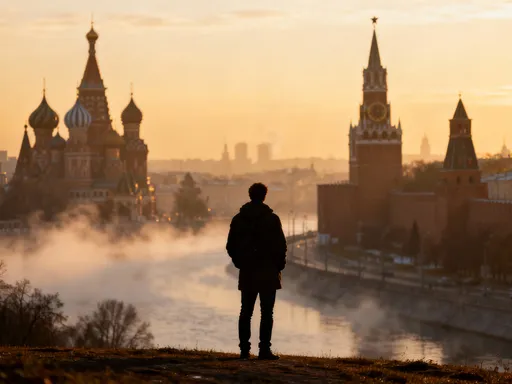
You know that feeling when you finally reach a dream destination, camera ready, only to find the view isn’t quite what you imagined? That’s exactly what happened to me in Moscow. I’d seen stunning photos of St. Basil’s at sunrise and the Moscow City skyline at night—but my first attempts to capture them were total fails. Over three trips, I learned the hard way which spots deliver magic and which ones waste your time. This is about real viewing experiences, not just pretty posts. Let me save you from the same pitfalls.
The Postcard Trap: When Reality Doesn’t Match the Hype
Moscow is one of the most photographed cities in Eastern Europe, and for good reason—its skyline blends centuries of architectural ambition, from onion domes to futuristic skyscrapers. Yet, many travelers arrive expecting the polished perfection of travel magazines, only to find a far more complex reality. The so-called ‘postcard view’ is often a carefully curated illusion, captured at a precise moment under perfect conditions and sometimes enhanced beyond recognition. Understanding this gap between expectation and experience is the first step toward a more rewarding visit.
Take Red Square, for example. It’s the heart of Moscow, flanked by the Kremlin walls, GUM department store, and the kaleidoscopic domes of St. Basil’s Cathedral. In photos, it appears serene and majestic, bathed in golden light. But in person, it can feel more like a bustling transit hub than a sacred landmark. Tour groups move in coordinated waves, vendors hawk souvenirs, and security personnel manage constant foot traffic. The angles that photographers love—the wide shot from the center of the square—are often obstructed by barriers, crowds, or temporary installations. Moreover, photography restrictions near the Mausoleum and certain Kremlin gates limit where you can stand and what you can capture.
Timing plays a crucial role in closing the gap between the ideal and the real. The golden hour in Moscow changes dramatically with the seasons. In summer, the sun sets late, often after 9 p.m., offering long stretches of soft, warm light. But in winter, daylight can vanish as early as 4:30 p.m., compressing your viewing window. What looks vibrant in July may appear flat and shadowed in December. Travelers who don’t adjust their expectations accordingly often leave disappointed. Managing your mindset—seeing the square not as a static postcard but as a living, breathing space—transforms frustration into appreciation.
Crowd Blindness: How Everyone Else Ruins Your Shot
One of the most common viewing frustrations in Moscow is simply finding space to see. Iconic vantage points attract not just tourists but also locals celebrating milestones, from wedding photos to graduation portraits. The Spasskaya Tower overlook, near the eastern edge of Red Square, is a prime example. It offers a dramatic view of St. Basil’s and the Kremlin, but it’s frequently occupied by couples in formal attire, surrounded by photographers and assistants. Similarly, the rooftop of GUM, while open to the public, becomes crowded during weekends and holidays, with long lines and limited rail space.
These scenes aren’t interruptions—they’re part of Moscow’s cultural rhythm. But they do require strategic planning if you want an unobstructed view. The simplest solution is timing: arrive early in the morning, ideally between 7:00 and 8:30 a.m., when the square is still quiet and cleaning crews are the only other presence. Weekdays are significantly less crowded than weekends, especially during the school year. If you’re set on a daytime visit, consider positioning yourself just outside the main flow—such as near the northern end of the square, closer to the State Historical Museum, where sightlines remain open and foot traffic thins.
Another effective strategy is to explore slight detours that offer similar perspectives without the congestion. For instance, the pedestrian bridge over the moat near the Alexander Garden provides a lower-angle view of the Kremlin towers, often free of crowds. Likewise, the upper floors of nearby shopping centers, such as TsUM or the Zaryadye Park visitor center, offer elevated glimpses without the need to join long queues. By stepping just a few meters off the beaten path, you can reclaim the sense of discovery that mass tourism often diminishes.
Weather Roulette: Moscow’s Sky Is a Wildcard
No matter how perfectly you plan your itinerary, Moscow’s weather can upend everything. The city experiences a humid continental climate, with long, cold winters and warm, sometimes humid summers. This means visibility can vary drastically from day to day. In autumn, persistent fog often rolls in from the Moskva River, obscuring high-altitude views and muting colors. Winter brings heavy snowfall, which, while beautiful, creates glare on camera lenses and limits outdoor comfort. Summer, though sunnier, can suffer from haze, especially during heatwaves, reducing the clarity of distant skylines.
I remember one trip in late October when I scheduled an early morning shoot at Sparrow Hills, hoping for a crisp panoramic view of the city. I arrived at dawn, only to find the entire horizon swallowed by a thick layer of mist. The iconic Moscow State University building loomed like a ghost in the distance, but the skyline beyond was invisible. Similarly, a winter evening at VTB Arena Park, planned for night photography of the Moscow City towers, was derailed by a sudden snowstorm that turned the LED-lit skyscrapers into blurred smears of light.
To combat these uncertainties, smart travelers use real-time weather tools. Apps like Windy, AccuWeather, and the Yandex Weather service provide detailed hourly forecasts, including cloud cover, wind speed, and visibility indexes. Checking these the night before allows for quick adjustments—swapping a sunrise shoot for a museum visit if clouds are predicted, or rescheduling a high-rise viewing for a clearer day. Another key tip: build buffer days into your itinerary. If you’re in Moscow for five days, plan your key viewing experiences on multiple days, giving yourself a backup window if conditions aren’t ideal. Flexibility, not rigidity, leads to the best visual rewards.
Elevation vs. Access: The Search for Height Without the Hassle
When it comes to city views, height matters. But in Moscow, not all tall buildings are created equal—and not all are accessible to the public. The city’s modern skyline, centered in the Moscow International Business Center (MIBC) known as Moscow City, features some of Europe’s tallest skyscrapers. The Federation Tower and OKO Tower dominate the skyline, but their observation decks are either closed to tourists or require special access, often limited to hotel guests or private events. Many online guides list these as must-see viewpoints, but without clear warnings about access restrictions, travelers risk disappointment.
The good news is that Moscow offers several reliable alternatives. One of the most accessible and rewarding is the viewing platform at the top of the Kotelnicheskaya Embankment Building, one of Stalin’s ‘Seven Sisters.’ While not as high as Moscow City’s towers, it provides a sweeping view of the Moskva River, the Kremlin, and central districts. Access is straightforward—visitors can enter through the building’s lobby with a valid ID and request permission from security. The platform is open on weekdays during daylight hours, and while not widely advertised, it’s a favorite among local photographers.
Another excellent option is the observation deck at Zaryadye Park, located just south of Red Square. This modern structure features a glass-floored platform that extends over the riverbank, offering a dramatic, unobstructed view of the Kremlin and Christ the Saviour Cathedral. The space is climate-controlled, with indoor and outdoor sections, making it usable in all seasons. Tickets are available online, and while popular, the timed entry system prevents overcrowding. For those seeking a more natural elevation, Sparrow Hills remains a top choice. The hilltop park provides a panoramic vista of the city, including Moscow State University, and is easily reached by metro. Unlike commercial observation decks, it’s free, open 24/7, and offers a more organic viewing experience.
Framing the Iconic: Why Angles Make or Break the Experience
Photography in Moscow isn’t just about being in the right place—it’s about being in the right spot. Small shifts in position can dramatically alter the composition and emotional impact of a view. St. Basil’s Cathedral, for example, is often photographed head-on from the center of Red Square. But this angle flattens the structure, hiding the intricate relationships between its nine individual chapels. A far more dynamic perspective comes from the northwest corner of the square, near the State Historical Museum. From there, the cathedral appears layered, with domes overlapping like petals, and the Kremlin wall framing the background.
Similarly, the reflection of Christ the Saviour Cathedral in the Moskva River is a sought-after shot, but the best mirror effect occurs not from the main embankment, but from a small pedestrian path beneath the Novospassky Bridge. This lesser-known spot requires a short walk from the Taganskaya metro, but the payoff is a quiet, unobstructed view with minimal foot traffic. The water here is calmer, and during sunrise, the golden light bounces perfectly off the cathedral’s gilded dome.
Another powerful framing technique involves using foreground elements to add depth. The iron railings of the GUM rooftop, for instance, can serve as a natural frame for shots of St. Basil’s, adding texture and context. Street lamps, tree branches, or even passing trams can become compositional tools when used thoughtfully. The key is patience—waiting for the right moment when light, movement, and alignment converge. Moscow rewards those who take the time to explore beyond the obvious angles.
Light Drama: Chasing Sunrise and Sunset in a Northern Capital
Light defines the character of a city, and in Moscow, it behaves differently than in more southerly European capitals. Due to its northern latitude, the city experiences extreme variations in daylight. In June, the sun sets after 10 p.m., and twilight lingers for hours, casting a soft, diffused glow known locally as ‘white nights.’ This extended light is ideal for photography, allowing ample time to experiment with long exposures and ambient lighting. However, in December, daylight may last only seven hours, with the sun barely climbing above the horizon.
Many travelers assume that ‘golden hour’—the period shortly after sunrise or before sunset—works the same way in Moscow as in Paris or Rome. But the low winter sun creates longer shadows and more directional light, which can highlight architectural textures in surprising ways. Early morning light in winter, for instance, strikes the eastern facades of the Kremlin towers with a warm, amber glow, emphasizing their stone carvings and historical depth. This effect is fleeting—often lasting only 15 to 20 minutes—but profoundly moving.
Summer sunsets, while later, can be hazy due to higher humidity and air pollution. To maximize clarity, aim for midweek evenings when industrial activity is lower. Additionally, the high angle of the summer sun means that shadows are shorter and less dramatic, which can make photos appear flat. The solution? Focus on reflections, water surfaces, and shaded areas where contrast remains strong. By aligning your viewing schedule with seasonal light patterns, you turn natural limitations into creative advantages.
Beyond the Lens: Rediscovering the Joy of Unfiltered Viewing
After years of chasing the perfect photo, I reached a turning point in Moscow—one winter evening at Borovitskaya Square. I had spent an hour adjusting my camera settings, waiting for the Kremlin towers to light up against the twilight sky. When the moment finally came, I realized I hadn’t truly seen it. My view was mediated by a screen, my attention divided between composition and exposure. So I put the camera down. And for the first time, I just looked.
What followed was a quiet revelation. Without the pressure to capture, I noticed details I’d missed: the way the floodlights gradually illuminated each tower, the soft hum of the city below, the crisp scent of cold air mixing with distant wood smoke. I watched as the stars emerged above the spires, faint but present despite the urban glow. That moment wasn’t preserved in a photo, but it stayed with me far longer than any image could.
This shift—from documentation to presence—is one of the most valuable lessons Moscow has taught me. The city’s beauty isn’t confined to postcard views or Instagram highlights. It lives in the rhythm of its streets, the warmth of a café after a long walk, the silence between snowflakes falling on a deserted square. When we allow ourselves to experience a place without filtering it through a lens, we engage all our senses. We remember not just how it looked, but how it felt.
Travel is not about accumulating images. It’s about collecting moments—those fleeting, unrepeatable instants when we are fully present. In Moscow, where history and modernity collide, where weather and crowds test our patience, the most powerful views are often the ones we don’t photograph. They are the ones we carry in memory, shaped not by pixels, but by emotion.
True viewing isn’t about capturing the perfect shot—it’s about being in the right place with the right mindset. Moscow’s beauty reveals itself not in filtered images, but in the quiet moments between the crowds, the unexpected clarity after the fog lifts, and the warmth of sunrise hitting stone after a freezing night. By avoiding these common viewing pitfalls, you’re not just seeing Moscow—you’re experiencing it. And that’s a perspective no photo can truly hold.