You Won’t Believe How Slow Travel Made Florence’s Food Come Alive
Florence isn’t just a city of art and history—it’s a feast for the senses. When I slowed down and stopped chasing checklists, I discovered its soul lives in the smell of fresh schiacciata baking at dawn, in nonnas rolling pasta by hand, and in sun-ripened tomatoes sold at tiny neighborhood markets. This is not about ticking off sights—it’s about savoring moments. Let me show you how embracing slow travel unlocks the true taste of Florence, one authentic bite at a time.
The Magic of Slowing Down in Florence
Florence rewards those who move with intention. Too many travelers rush through the city in a single day, checking off the Duomo, the Uffizi, and Ponte Vecchio like items on a grocery list. But when you move at that pace, you miss the heartbeat of the city—the quiet hum of life that pulses just behind the tourist façade. Rushing turns Florence into a postcard. Slowing down turns it into a home. Walking at a gentle pace allows you to notice the small details: the golden glow of early light on centuries-old stone, the sound of brooms sweeping cobblestones as shopkeepers open their doors, the faint scent of yeast and olive oil drifting from a corner bakery. These are the moments that stitch a place into your memory.
When you walk slowly, your senses awaken. You begin to hear the rhythm of Florentine life—the soft cadence of local dialect in market conversations, the laughter spilling from a trattoria doorway, the clink of espresso cups at a neighborhood bar. These sounds are not background noise; they are the language of belonging. Slowing down shifts your travel from visual consumption to full sensory immersion. You stop seeing Florence and start feeling it. And nowhere is this more true than in the realm of food. Taste becomes a form of cultural understanding. Each bite tells a story of seasonality, tradition, and care. The act of eating transforms from fueling the body to honoring the moment.
Slow travel is not about doing nothing. It’s about doing deeply. It means choosing to linger over a morning pastry instead of grabbing a coffee to go. It means wandering without a map, letting curiosity guide you to a hidden square or a family-run grocery. It means accepting that not every moment must be productive. In Florence, this mindset opens doors—sometimes literally. Shopkeepers begin to recognize you. A baker might offer you a sample of warm bread. A vendor might share a recipe. These small gestures are born from time and presence. They cannot be rushed. They are the quiet gifts of a traveler who has chosen to stay a little longer, look a little closer, and taste with intention.
Morning Rituals: Starting the Day Like a Local
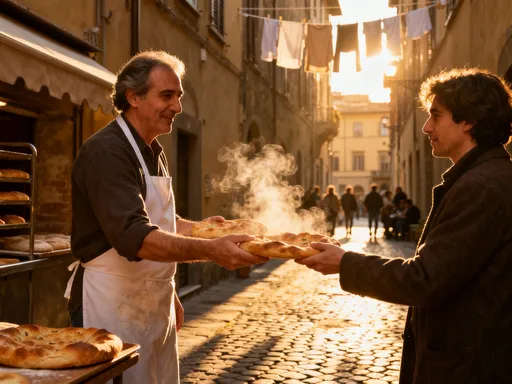
In Florence, the day begins with warmth—both literal and emotional. As the city stirs, neighborhood bakeries flicker to life, their ovens glowing with the heat of the first bake. The scent of schiacciata, Tuscany’s rustic flatbread, drifts into the streets like an invitation. This is not the time for grand plans or packed itineraries. This is the time for ritual. Locals step out in slippers or work boots, folding euros into their palms as they order a cornetto—soft, buttery, and never confused with a French croissant. They stand at the bar, one hand wrapped around a tiny cup of espresso, sipping quickly before heading to work or errands. There is no to-go culture here. Coffee is a moment, not a commodity.
Observing this daily rhythm offers a quiet lesson in presence. The Florentine breakfast is brief but meaningful. It is not eaten in front of a screen or between texts. It is a pause—a breath before the day unfolds. When you adopt this rhythm, even as a visitor, you begin to feel the texture of local life. You learn that time here is not always measured in hours but in moments of connection. A smile from the barista, a nod from a regular, the warmth of a paper-wrapped pastry in your hands—these are the ingredients of belonging.
Starting your day like a local also means respecting the pace. Don’t expect tables to be cleared at 8 a.m. for the next guest. Many small cafes are not designed for lingering. They are part of the neighborhood’s circulatory system—places where people flow in and out, like tides. But if you return day after day, you may find yourself offered a chair, a warmer smile, or even a taste of something new from the oven. This is how trust is built: through consistency, respect, and shared routine. The morning ritual is not just about food. It’s about becoming part of the fabric of the day, one espresso at a time.
Market Wandering: Where Food Stories Begin
No place in Florence captures the spirit of slow food quite like the Mercato Centrale. Located in the heart of the city, this bustling hall is more than a marketplace—it is a living archive of Tuscan cuisine. On the ground floor, beneath iron beams and vintage lamps, vendors display their treasures: wheels of Pecorino aged to perfection, deep red prosciutto sliced paper-thin, olives marinated with rosemary and garlic, and baskets of produce so vibrant they look painted. This is not a tourist spectacle. It is a working market, where Florentines come to shop with the same care their grandparents once did.
Wandering through the market at a leisurely pace transforms shopping into storytelling. A vendor might tell you about the farm where her tomatoes were grown, or the hillside where the wild porcini mushrooms were foraged. You might learn about heirloom varieties of beans—like the prized Sorana bean, grown in mineral-rich soil and known for its delicate skin and creamy texture. These conversations are not transactions. They are invitations to understand. Each ingredient carries a history, a terroir, a season. When you take the time to listen, you begin to see food not as a product but as a legacy.
Choosing ingredients in Florence becomes a mindful practice. It is not about efficiency or price. It is about quality, connection, and seasonality. You learn to ask, “What’s fresh today?” rather than consulting a list. You begin to recognize the faces of the vendors, to greet them by name, to accept their recommendations. This is how relationships form. And these relationships shape your meals. A simple salad gains depth when you know the lettuce was picked that morning from a nearby farm. A piece of cheese becomes more than flavor—it becomes a story shared between strangers. In the market, slow travel reveals its greatest gift: the ability to belong, even if only for a few days.
Cooking with Time: A Homemade Pasta Afternoon
One of the most transformative experiences in Florence is learning to cook pasta by hand. Not in a flashy demonstration kitchen, but in a small, family-run cooking class tucked above a quiet street. These classes are not designed for mass tourism. They are intimate, often limited to six or eight guests, with a focus on tradition rather than performance. The instructor is usually a local woman—sometimes a retired teacher, sometimes a lifelong cook—who learned from her mother and grandmother. Her hands move with quiet confidence, kneading dough with the same motion she has used for decades.
Making pappardelle from scratch is a lesson in patience. The ingredients are simple: flour, eggs, a pinch of salt. But the process demands attention. You must feel the dough, adjust the moisture, let it rest. There is no rushing. Each roll of the pin, each cut of the knife, is an act of care. As you work, stories unfold—about Sunday lunches, holiday feasts, the importance of using only the best eggs. You learn that Tuscan cooking is not about complexity. It is about respect for ingredients and technique. A dish like pappardelle al ragù takes hours to prepare, not because it is difficult, but because it must be done slowly to develop flavor.
When the meal is finally ready, it is shared family-style. Plates are passed, wine is poured—usually a bold Chianti from a nearby vineyard—and conversation flows. There is no rush to finish. No one checks their phone. This is the heart of Tuscan hospitality: food as connection, as celebration, as love made visible. You leave not just with a recipe, but with a memory. The flour under your nails, the warmth of the kitchen, the laughter around the table—these are the things that stay with you. Cooking in Florence is not about mastering a dish. It is about slowing down, being present, and understanding that the best meals are made with time.
Hidden Trattorias: Eating Where Florentines Eat
Beyond the well-trodden streets of San Lorenzo and Santa Croce lie trattorias that never appear on tourist maps. These are family-run restaurants, often with just a few tables, where the menu changes daily based on what is fresh and available. There are no English-speaking waiters, no photo menus, no neon signs. Just a handwritten list taped to the door and the smell of garlic and tomatoes drifting from the kitchen. These are the places where Florentines go to eat—not to perform, but to nourish.
One of the most beautiful aspects of these hidden spots is that the best dishes are often not on the menu at all. A cook might offer you ribollita—a hearty bread soup made with leftover vegetables and stale bread—if she thinks you’ll appreciate it. Or she might bring out a plate of grilled lampredotto, a traditional street food made from tripe, served in a soft roll with green sauce. These offerings are not for show. They are acts of generosity, extended to those who show curiosity and respect. When you sit down without expectations, you open yourself to discovery.
Building a relationship with a neighborhood trattoria takes time. It means returning, not just once, but several times during your stay. Each visit, you might learn a little more—about the owner’s family, the wine they prefer, the dish their nonna used to make. You might be offered a taste of something new, or invited to sit at the kitchen table. This is not service. It is hospitality. And it is born from the slow traveler’s greatest strength: presence. When you are not rushing from one sight to the next, you create space for these moments. You become more than a guest. You become a familiar face, a welcome presence. And in return, you are given access to the true soul of Florentine dining—not as a performance, but as a way of life.
The Rhythm of the Afternoon: Aperitivo and Rest
In Florence, the day is not a straight line. It is a curve, rising in the morning, pausing in the afternoon, and swelling again in the evening. This rhythm reflects a deeper philosophy: that life is not meant to be rushed. After lunch, many shops close. Streets grow quiet. This is not laziness. It is intention. The riposo—the afternoon rest—is a cultural institution, a recognition that both body and spirit need time to recover. During these hours, locals return home, nap, read, or simply sit in silence. The city breathes.
As the sun begins to lower, life returns. This is the time for aperitivo—a ritual of light drinking and light conversation. In Piazza Santo Spirito, young and old gather at outdoor tables, sipping wine, spritz, or chilled white from the hills. The mood is relaxed. Laughter comes easily. The golden light softens the stone buildings, turning the piazza into a stage for everyday life. This is not a performance for tourists. It is a moment of collective pause, a shared breath before the evening unfolds.
Participating in the aperitivo is one of the simplest yet most profound acts of slow travel. You don’t need to speak perfect Italian. You don’t need to know the menu. You just need to be present. Order a glass of wine. Sit. Watch. Listen. Let the pace of the city settle into your bones. When you slow down your meals and your moments, you begin to taste more deeply. Food is no longer fuel. It is experience. Conversation is no longer small talk. It is connection. The aperitivo teaches you that the best moments are not the ones you plan. They are the ones you allow.
Carrying the Taste of Florence Home
When your journey ends, you will carry more than souvenirs. You will carry the scent of rosemary on a warm breeze, the memory of a nonna’s hands shaping dough, the sound of market vendors calling out the day’s specials. These are the true keepsakes of slow travel. They are not found in photos or checklists, but in the quiet moments that settle into your soul. And among them, the most lasting is the taste of Florence—not just on your tongue, but in your heart.
Bringing this taste home does not mean perfectly recreating a recipe. It means bringing mindfulness to your meals. It means choosing fresh ingredients, cooking with care, and savoring each bite. It means lighting a candle, pouring a glass of wine, and eating without distraction. It means remembering that food is not just sustenance. It is culture. It is memory. It is love. When you eat like this, even far from Tuscany, you are still in Florence.
Slow travel is not about doing less. It is about feeling more. It is about tasting deeper, listening closer, remembering longer. In Florence, where every cobblestone hums with history and every meal tells a story, this way of traveling reveals the truth: that the richest experiences are not the ones you rush through, but the ones you linger in. So the next time you travel, don’t count the sights. Count the moments. Let the food guide you. Let the pace teach you. And let Florence remind you that the best journeys are not measured in miles, but in memories made one slow, delicious bite at a time.